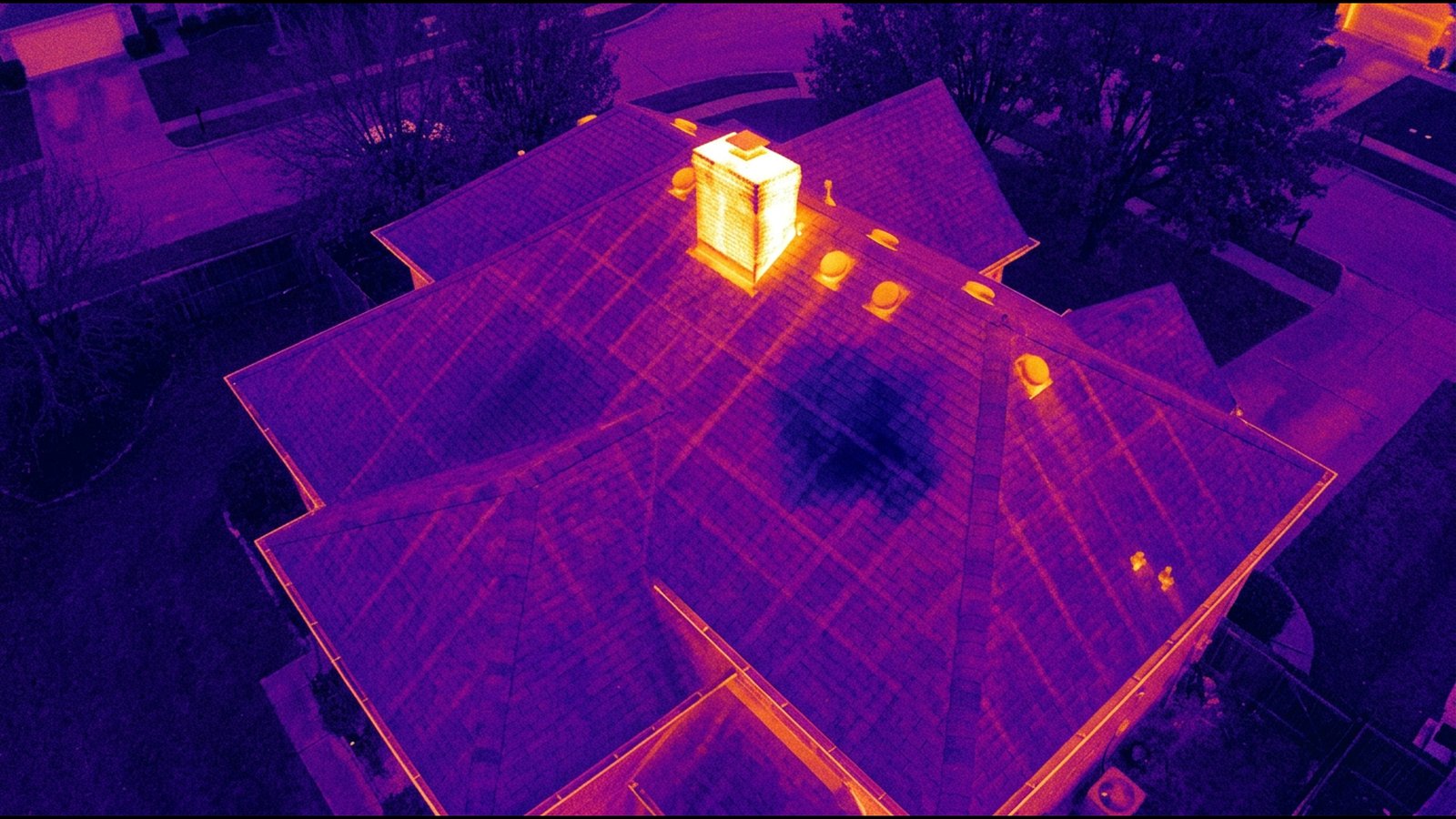
Thermal vs Visual Drone Roof Inspection — Which Do You Need?
When infrared imaging adds value for moisture and heat-loss problems, when a visual inspection is enough, and how to read a thermal report.
Visual inspection
High-resolution RGB imaging is the right starting point for storm damage, missing or lifted shingles, cracked tiles, flashing problems, debris and general condition. It is faster, simpler to schedule and easier for non-specialists to understand.
Thermal inspection
Infrared imaging can reveal temperature differences linked to trapped moisture under flat-roof membranes, insulation gaps and heat loss. It is most useful on commercial low-slope roofs and building envelopes, and when leaks are suspected but not visible.
Conditions matter
Thermal results depend on weather: typically a clear day followed by an evening or night flight when the roof is releasing stored heat, with a dry surface and light wind. A good provider plans around these conditions and states them in the report.
Radiometric vs non-radiometric
Radiometric cameras record a temperature value for every pixel, allowing spot measurements and later analysis. Non-radiometric cameras show relative differences only. If you need temperatures in the report, ask for radiometric data and the source files.
Interpretation is a skill
Owning a thermal camera does not prove thermography competence. Ask who interprets the imagery, what training or certification they have, and request a sample thermal report.
Ready to compare providers?
Describe your project once and get quotes from suitable property drone providers.