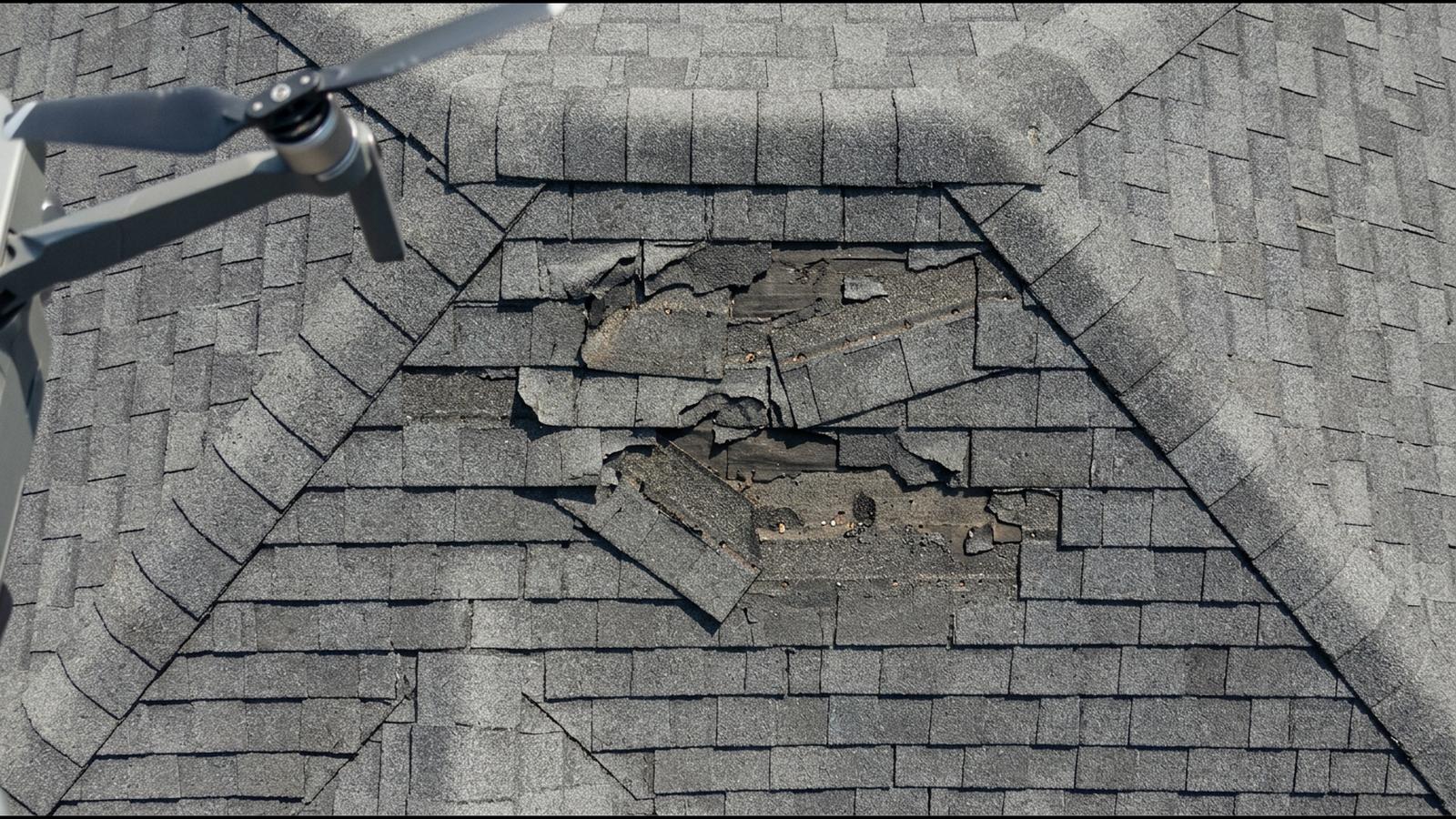
Drone Roof Inspection: A Buyer’s Guide
How drone roof inspections work, what a good roof report contains, and what a drone inspection can and cannot tell you.
How a drone roof inspection works
A pilot flies a planned pattern over and around the roof, capturing overlapping high-resolution images of shingles or tiles, flashings, valleys, penetrations, gutters and chimneys. Some providers also build an orthomosaic or 3D model so the whole roof can be measured and reviewed on screen.
What a good report contains
Expect an overview image, close-ups of each issue with location markers, a summary of observed conditions, and the date and time of capture. If measurements are included, ask how they were produced and what accuracy is claimed. Ask for a sample report before you book.
What a drone cannot replace
A drone documents what is visible. It does not replace a licensed roofer, engineer or public adjuster where a professional opinion, repair specification or claim determination is needed. Providers should be clear about who interprets the imagery and what credentials they hold.
Safety and access advantages
Drones avoid ladders and walking on steep, fragile or storm-damaged roofs, and can document large or multi-building sites quickly. They are particularly useful for tile, slate and metal roofs that can be damaged by foot traffic.
Checks before you hire
Confirm an FAA Part 107 certificate, liability insurance, and — for providers selling written reports — professional indemnity or errors-and-omissions cover. Ask how owner consent and neighbour privacy are handled.
Ready to compare providers?
Describe your project once and get quotes from suitable property drone providers.