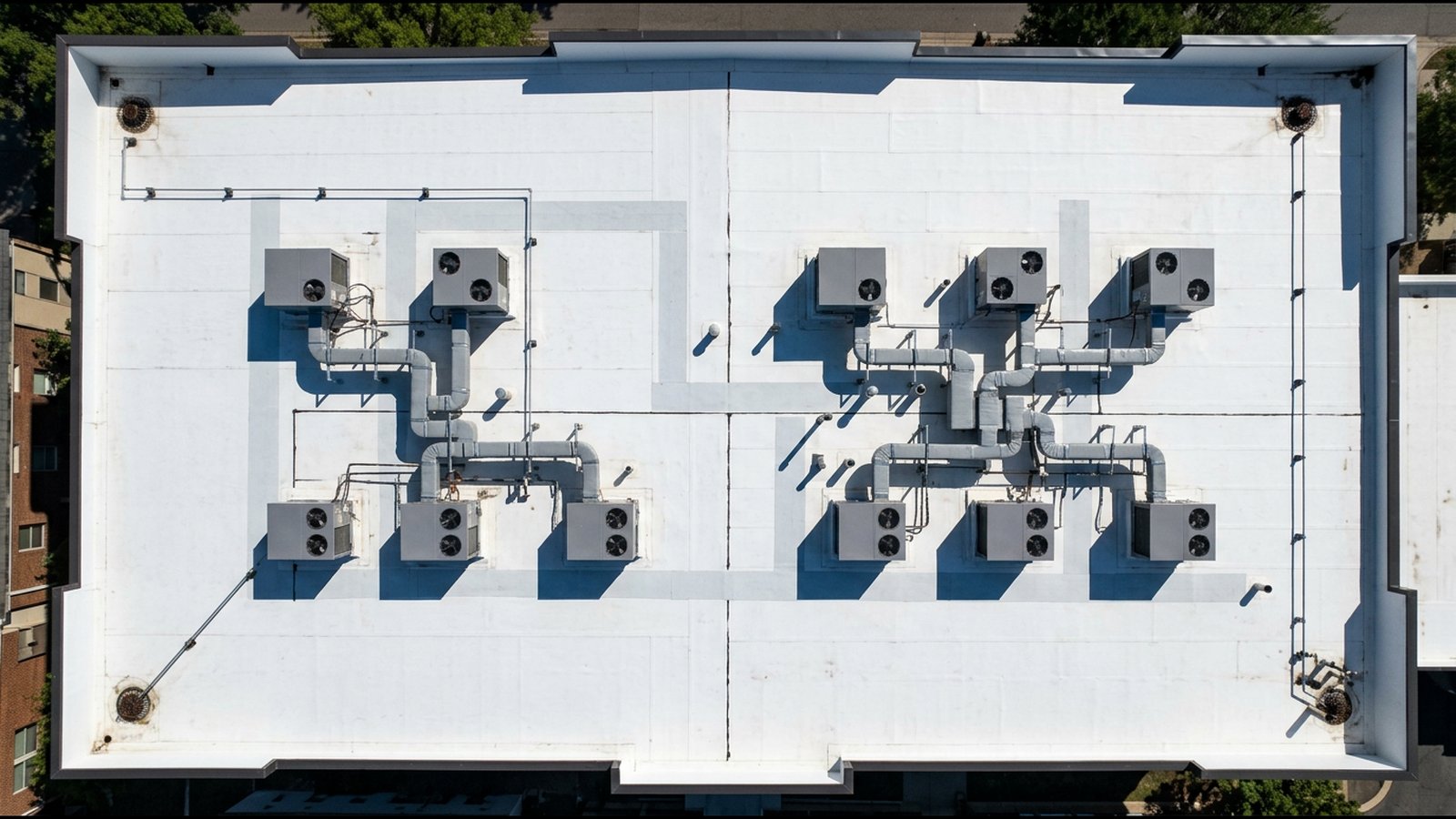
After a Hailstorm: Using Drone Inspection for Faster Documentation
A practical checklist for homeowners, property managers and contractors after hail or wind damage.
Stay safe first
Do not climb onto a damaged roof. Keep clear of fallen lines and debris, and make urgent temporary repairs only when it is safe to do so.
Document early
Record the date of the storm and take ground-level photos of visible damage, gutters, siding, windows and vehicles. A drone inspection can then capture the full roof surface without anyone walking on it.
What to ask the drone provider
Ask for geotagged, timestamped images of every roof plane, close-ups of impact marks and damaged components, an overview image with locations marked, and delivery of original files alongside any edited set.
Working with your insurer
Check your policy and contact your carrier or agent about their claims process. Share drone imagery as supporting documentation; the carrier and its adjusters make the claim decision.
Find local help quickly
Search the directory for providers offering hail damage or storm damage imaging near the property, and use the CAT-ready information on profiles during major events.
Ready to compare providers?
Describe your project once and get quotes from suitable property drone providers.